
PRESS RELEASE
The Future of Knowledge Returns on 10th November at the British Library
3 August 2026
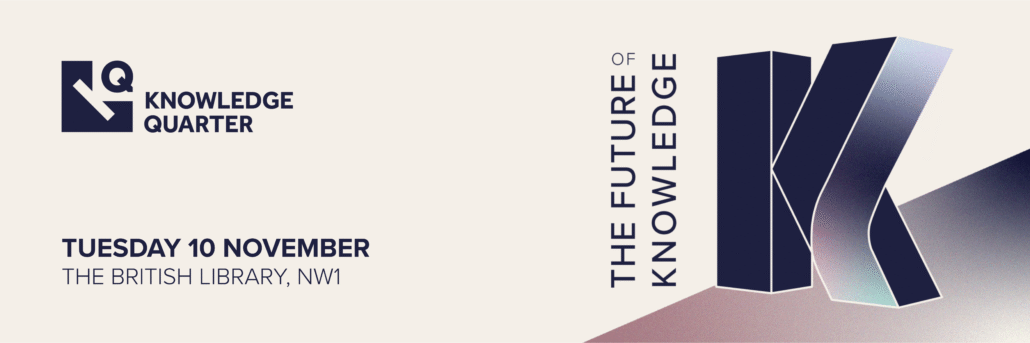
Our biggest event of the year returns on Tuesday 10 November at the British Library.
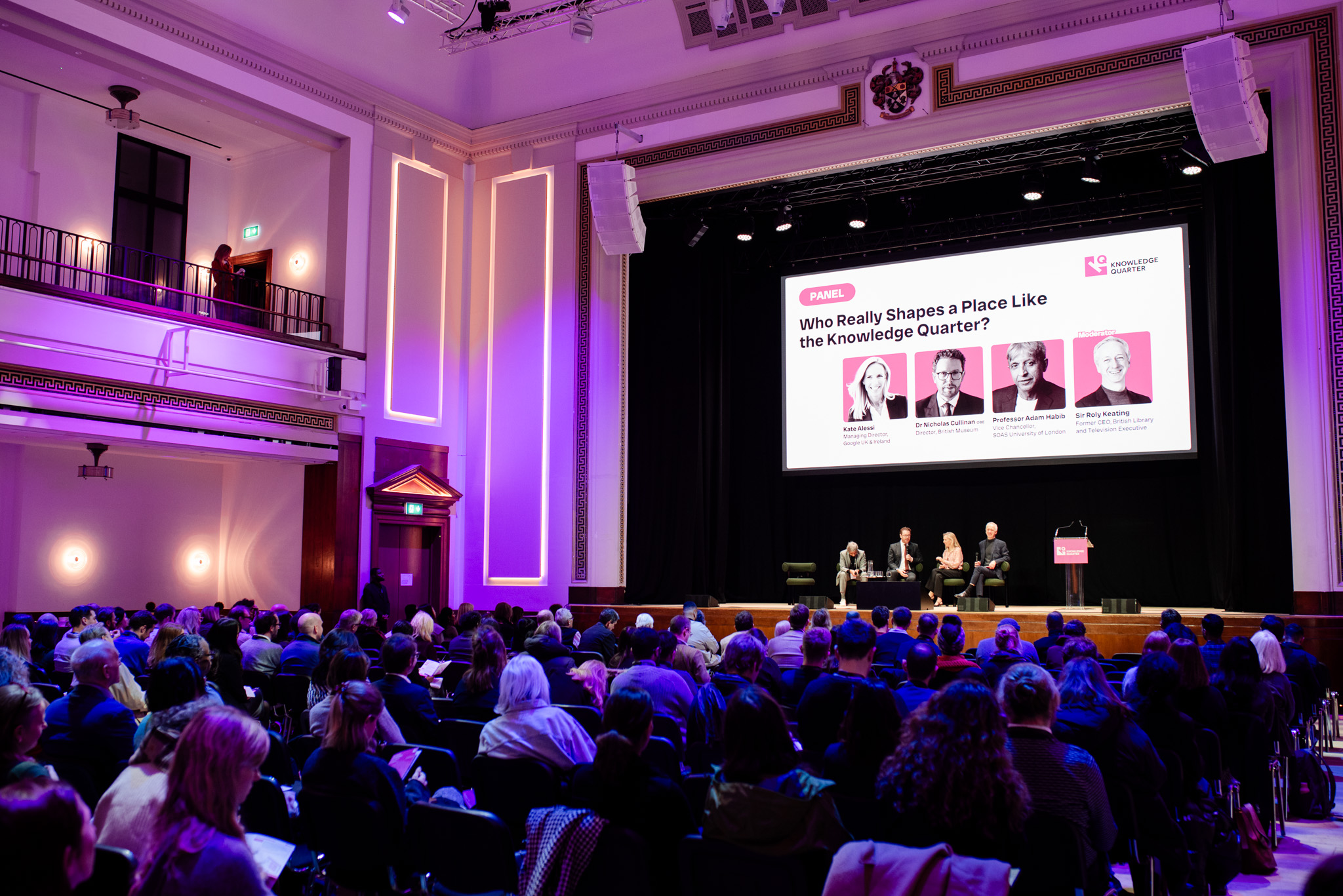
The Future of Knowledge is the Knowledge Quarter’s flagship annual conference, the one day of the year in which the district’s world-class institutions gather under a single roof, to cut across silos and sectors, and explore what the future of knowledge and innovation looks like. This year the conference will host up to five parallel streams from 9.30am to 5.00pm, from workshops and panel discussions, to a partner expo, with delegates free to move between streams and shape the day around their interests.
Within a one-mile radius around King’s Cross sits one of the densest concentrations of knowledge organisations anywhere in the world. For the past ten years, the Knowledge Quarter has united these organisations, and built the area’s reputation as Europe’s premier innovation district. The Future of Knowledge is where this work all comes together. For one unique day, thought leaders across these organisations work through the same questions in the same place. A geneticist, an archivist, an investor and a community organiser are often circling versions of the same problem, and this year’s programme is carefully developed around these overlaps and intersections. Research, culture, human and planetary health, new technology, investment and the neighbourhood itself are focus areas explored throughout the day, in curated cross-sector forums designed to forge new partnerships and open new areas of knowledge. Innovation here isn’t sector based; it happens when different fields and life experiences meet.
This inclusive idea of innovation already runs through our district’s work. In 2025, Google, Camden Council and Camden Learning opened the London AI Campus to give Camden school children technical experience with the tools that will shape their working lives. Google’s career certificates have funded 780 scholarships for Camden residents in data and digital careers. Camden STEAM has connected more than sixty employers – among them, the Francis Crick Institute and UCL – with local schools, reaching thousands of pupils, and putting hundreds of young people into work placements. LIFT, a jobs partnership across Camden, Islington, Hackney and Tower Hamlets, has helped local residents – many from underrepresented groups – into roles within the knowledge economy. Together these collaborative initiatives turn the district’s concentration of knowledge into opportunity for the people who live closest to it.
The opportunity is enormous. The Knowledge Quarter is one of London’s largest life sciences clusters, home to 176 organisations and more than 60,000 people working in the field. The growth of the sector isn’t slowing. On the site of St Pancras hospital, the UCL Institute of Ophthalmology and Moorfields Eye Charity are building Oriel, a £400 million centre opening in 2027, which will bring eye research and patient care under one roof, shortening the path from lab to clinic. The physical sciences run just as deep. Professor Geoffrey Hinton, who founded UCL’s Gatsby Computational Neuroscience Unit, was awarded the 2024 Nobel Prize in Physics, and new developments at Euston Station are attracting an increasing number of quantum businesses to the area.
2026 is a year of significant moments for our district, drawing unprecedented international attention. The Bayeux Tapestry, a piece of the nation’s history, arrives on UK soil for the first time in over 900 years, for a blockbuster exhibition at the British Museum. At the same time, the future is being made here; Google has now opened its doors on one of the most unique developments in Europe. Platform 37 promises to be more than a physical landmark, but a landmark in the story of AI.
These moments, and the reputation of the district, has not gone unnoticed. This year, Boehringer Ingelheim, OpenAI and Anthropic will open new offices in the heart of the Knowledge Quarter, citing our dense cluster of research institutions and proximity to academic and innovative talent as central reasons behind the move.
All this is the culmination of a story of an area, which has been made by organisations and individuals working collaboratively to explore the intersections of knowledge, and push the boundaries of creativity, culture, science and technology.
We invite you to come and meet the makers at the Future of Knowledge. The conference is open to all, from members and partners to the general public. Tickets are live on Tuesday 1st September from 09:00am, with programme details to follow soon.
About the Knowledge Quarter
The Knowledge Quarter is one of the world’s leading innovation districts, within a one-mile radius around King’s Cross. It brings together the district’s universities, research institutes, cultural organisations, technology companies and businesses in a shared commitment to advancing ideas, people and place. Its members include the British Library, the Francis Crick Institute, UCL, the Wellcome Collection and Google DeepMind. Together the district generates £34 billion in annual GVA and draws more than eight million visitors a year.
Contact:
Website: conference.knowledgequarter.london
Press: lucy.young@knowledgequarter.london
Partnerships: events@knowledgequarter.london
